


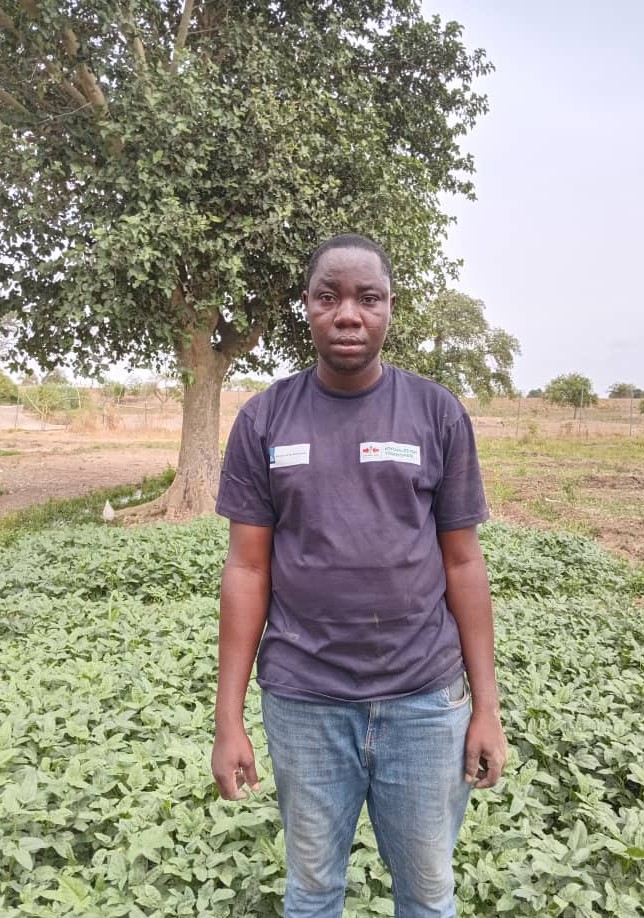
As talks of regional food security intensify in the Upper East Region, Alhassan Elliasu Ayariga, an Agricultural Extension Officer with East-West Seed Knowledge Transfer, is calling for a paradigm shift in how Ghana approaches vegetable production.
In an exclusive interview with Gumzang Fm, Mr. Ayariga discussed the untapped potential of the Upper East Region, the “good news” behind Burkina Faso’s tomato export ban, and the specific hurdles keeping local farmers from achieving a year-round harvest.
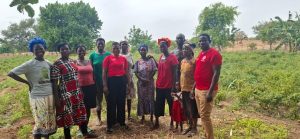
“My mission is simple: to help smallholder farmers,” Mr. Ayariga began. “Specifically, those already in vegetable cultivation and those with the interest to join. Since arriving here, I’ve realized that the two most vital resources, water and land are readily available. The people are willing to work, but they are hitting significant roadblocks.”
According to Mr. Ayariga, the most immediate physical threat to farming isn’t the climate, but livestock. “The biggest challenge is fencing. Stray animals are very destructive, and most smallholders lack the resources to buy quality fencing materials to protect their crops.”
Beyond protection, farmers struggle with the initial investment required to begin a season. “After the hard work of harvesting, there is often no stable market. Farmers are left with no choice but to sell at low prices, which is incredibly discouraging.”
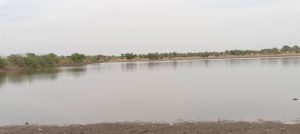
Recent news that the Burkina Faso government is banning tomato exports might worry some, but Mr. Ayariga sees it as a golden opportunity for Ghana. “This is actually good news for us in this region and Ghana as a whole. We have the water sources and the land for mechanized farming. We can do it as Ghanaians, we can do it as Northerners, and we can certainly do it as people of the Upper East Region.”
While noting that his organization has not yet formally petitioned the government, he hinted that his management and regional leads are strategizing. “If the government steps in now, we can reach a point where importation is no longer necessary,” he added.
One of the primary goals of the East-West Seed Knowledge Transfer an NGO, is to change the culture of seasonal farming.
“In Northern Ghana, we often stop farming once the rains end. We sit back and say, ‘there is no farm,’ even when water sources are right in front of us,” Ayariga explained. “It’s a knowledge gap. Since we started engaging the community, especially the women, we’ve seen a 90 to 99% readiness rate. They are ready to work; they just need the ‘how’.”
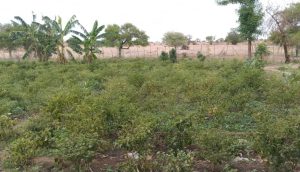
The tension between livestock owners and crop farmers is a long-standing issue, recently requiring the intervention of the Ministry of Food and Agriculture (MOFA) District Director. To move forward, Mr. Ayariga believes a multi-sectoral approach is the only way out.
“I am calling on my colleague extension officers, District Agric Officers, stakeholders, and educationalists to come to the farmers’ aid,” he urged.
“If we come together to support them with energy, finances, and knowledge, these farmers will work diligently and secure our food future.”