


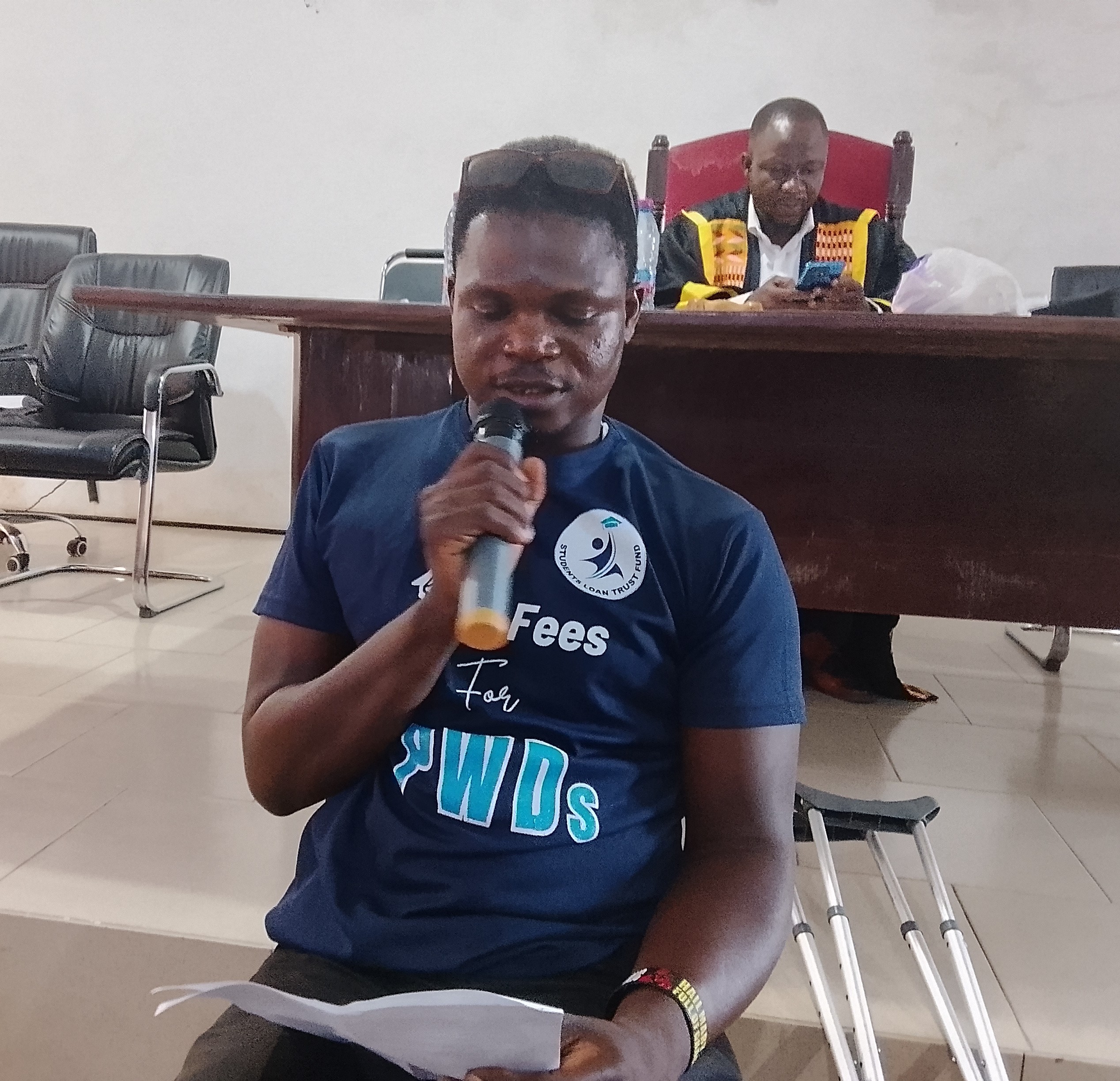
In a move to bolster transparency and economic independence for persons living with disabilities (PLWDs), the Chairman of the Talensi District Disability Fund Management Committee, Mr. Clement Sampana, has delivered a comprehensive sensitization address aimed at demystifying the administration of the Disability Common Fund.
Speaking to assembly members and community stakeholders, Mr. Sampana emphasized that the fund is not merely a grant, but a strategic tool designed to restore dignity through “sustainable labor” and poverty alleviation.
According to Mr. Sampana, the Disability Common Fund was instituted with two primary pillars in mind: Economic Empowerment by minimizing poverty through the support of income-generating activities. Social Image Enhancement, providing PLWDs with the means to engage in dignified work, thereby shifting public perception.
Beyond business support, the Chairman highlighted that the fund covers educational expenses for students and apprentices, provides technical aids (assistive devices), and offers crucial support for caregivers or parents of children with severe disabilities who require intensive, round-the-clock care.
To ensure the money reaches the right hands, Mr. Sampana detailed the structure of the Disability Fund Management Committee (DFMC). The committee consists of six core members, ensuring a multi-sectoral approach; The District Officer of the National Council on Persons with Disabilities (NCPD), the Chairperson of the Social Services Sub-committee, the District Director of the Department of Social Welfare and Community Development, two representatives from the Ghana Federation of Disability Organizations (GFD) and the District Director of the Ghana Enterprise Agency (GEA). “These core members are automatic representatives of key institutions,” Mr. Sampana noted, adding that while a broader group of 30 members exists to provide expertise when needed, they do not hold voting rights in final decision-making.
One of the most critical points of the address was the application procedure. Mr. Sampana clarified that applications must be submitted in person to the DFMC Secretary.
“The reason for this policy is that the vetting process begins the moment the form is submitted,” he explained. “The Secretary must immediately ascertain the disability status of the applicant to ensure only PLWDs are shortlisted, preventing non-disabled individuals from accessing these specific resources.”
For those who are non-literate or whose disability prevents them from filling out forms, assistance is available at the office. Notably, there are no deadlines; applications are accepted year-round to ensure help is available whenever a need arises.
Mr. Sampana walked the audience through the rigorous “due diligence” phase: The District Assembly notifies the committee when funds are transferred into the PWD account. The Chairman convenes a meeting within one month to approve, deny, or defer applications based on merit. A detailed report including names, disability types, and justifications is submitted to the Assembly for processing. Beneficiaries are invited to the Assembly within a month of approval to receive cash or items. The process does not end with the handover of funds. Mr. Sampana stressed that Monitoring and Evaluation (M&E) is the final, vital step.
“The committee conducts follow-ups to see how the funds are being used. Our findings and recommendations from these visits allow us to adjust our methods and ensure the fund continues to serve its true purpose,” he concluded.
Mr. Sampana expressed his hope that assembly members would take this information back to the electoral areas, ensuring that no person with a disability in the Talensi District is left behind due to a lack of information.