


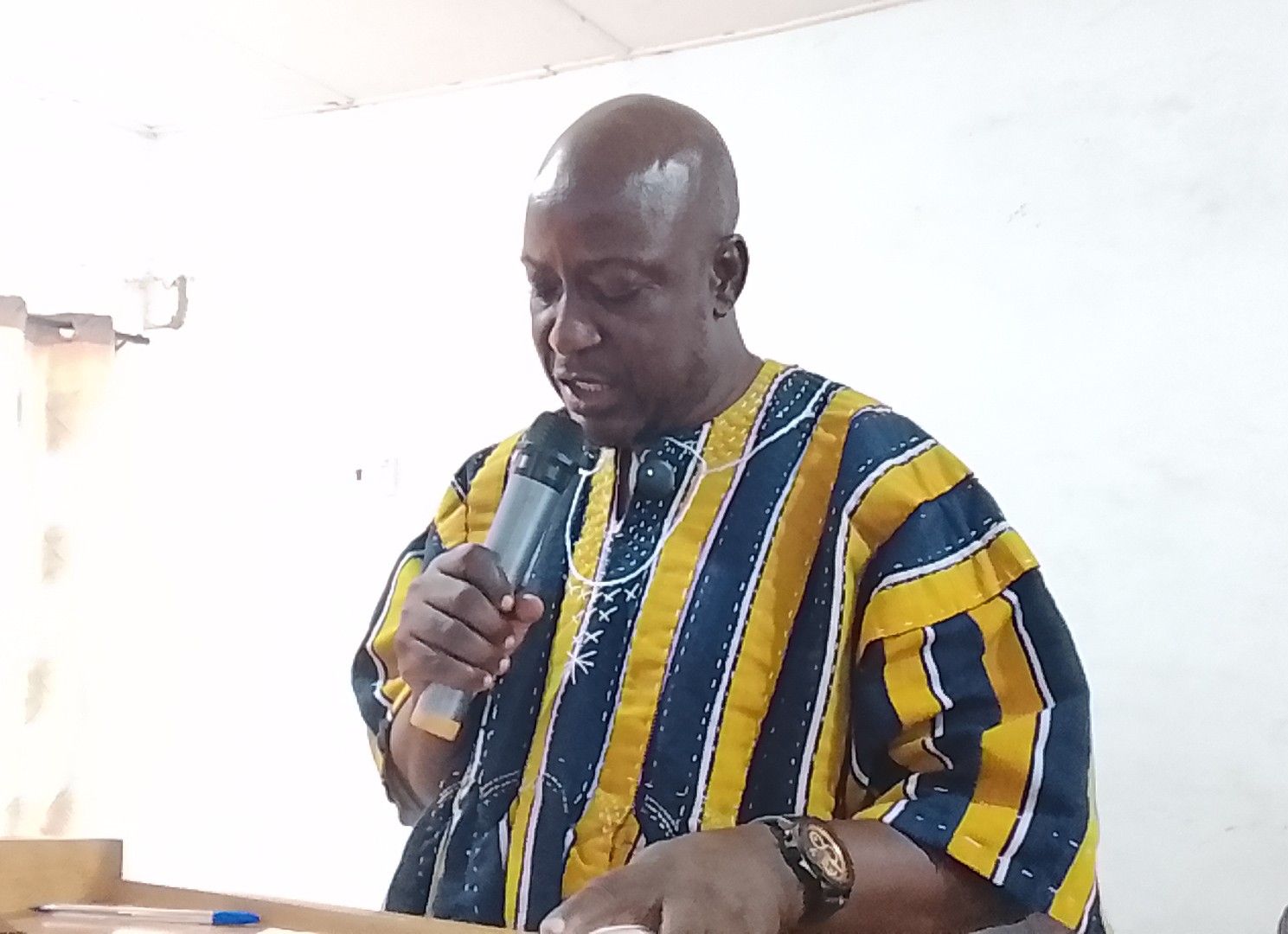
Hon. John Millim Nabwonya (DCE, Talensi District)
In a powerful address marking the 2026 World Day Against Child Labour, the District Chief Executive (DCE) for Talensi, Hon. John Millim Nabwomya, issued a uncompromising “red card” to child labor, calling on stakeholders to dismantle the practices keeping children in hazardous mining sites instead of classrooms.
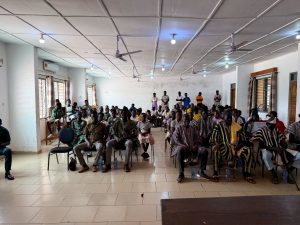
Speaking on Friday, June 12, 2026, at the District Assembly Conference Hall in Tongo, Hon. Nabwomya addressed a packed room of traditional leaders, mining operators, and civil society groups. This year’s global theme, “Red Card to Child Labour: Fair Play for Children, Decent Work for Adults,” struck a particularly urgent chord in Talensi a district heavily anchored by its mining industry.
While acknowledging Talensi’s vast mineral wealth, the DCE did not shy away from the stark socio-economic challenges confronting the district. He pointed out the troubling reality of school-aged children carrying ore, washing minerals, and spending vital school hours at mining sites exposed to dust, open pits, and toxic chemicals.
“Every child seen at a mining site during school hours represents a dream at risk,” Hon. Nabwomya stated. “Every child deprived of education today increases the likelihood of poverty tomorrow. The cost of child labor is therefore not borne only by the child. It is borne by families, communities, and the nation as a whole.”
The Children’s Act, 1998 (Act 560): Prohibits exploitative and hazardous child labor. The Labour Act, 2003 (Act 651): Bans the employment of children under 15 and strictly prohibits minors from mining and quarrying.
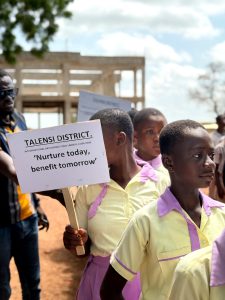
The DCE reminded attendees that under Ghanaian law, work that deprives children of their childhood, dignity, or education is strictly illegal. While normal household chores or safe family help are acceptable, pushing minors into hazardous labor violates both the Children’s Act of 1998 and the Labour Act of 2003.
Hon. Nabwomya directed a firm warning toward mining concession owners, site managers, and operators, demanding absolute compliance with national labor laws. He emphasized that corporate social responsibility begins with ensuring no child sets foot on a commercial work site.
He also extended an empathetic yet firm plea to parents and guardians facing economic hardships: Temporary income earned by a child today can never replace the lifelong benefits of a quality education. Children belong in classrooms, playgrounds, libraries, and laboratories not dangerous workplaces. The focus must shift toward securing decent work for adults so that families do not have to rely on their children for survival.
The address concluded with a call for a united front, urging traditional chiefs, social welfare officers, security agencies, and faith-based organizations to collaborate, monitor sites, and report violations.
“The measure of our success as a district will not be the quantity of minerals extracted from our soil,” Nabwomya declared, “but the quality of children we raise for the future.”
Local authorities hope that this year’s June 12 commemoration serves as a turning point, moving Talensi closer to a future where every child is protected, educated, and free to thrive.